
Stretching along the western edge of India, the Western Ghats are more than just a mountain range — they are a living, breathing sanctuary for some of the rarest and most extraordinary creatures on the planet. Recognized as a UNESCO World Heritage Site and one of the world’s eight “hottest hotspots” of biodiversity, this ancient range shelters thousands of endemic species found nowhere else on Earth.
Let’s take a closer look at some of the unique inhabitants of this wild paradise — creatures that soar, glide, dance, and vanish into the misty forests of the Western Ghats.
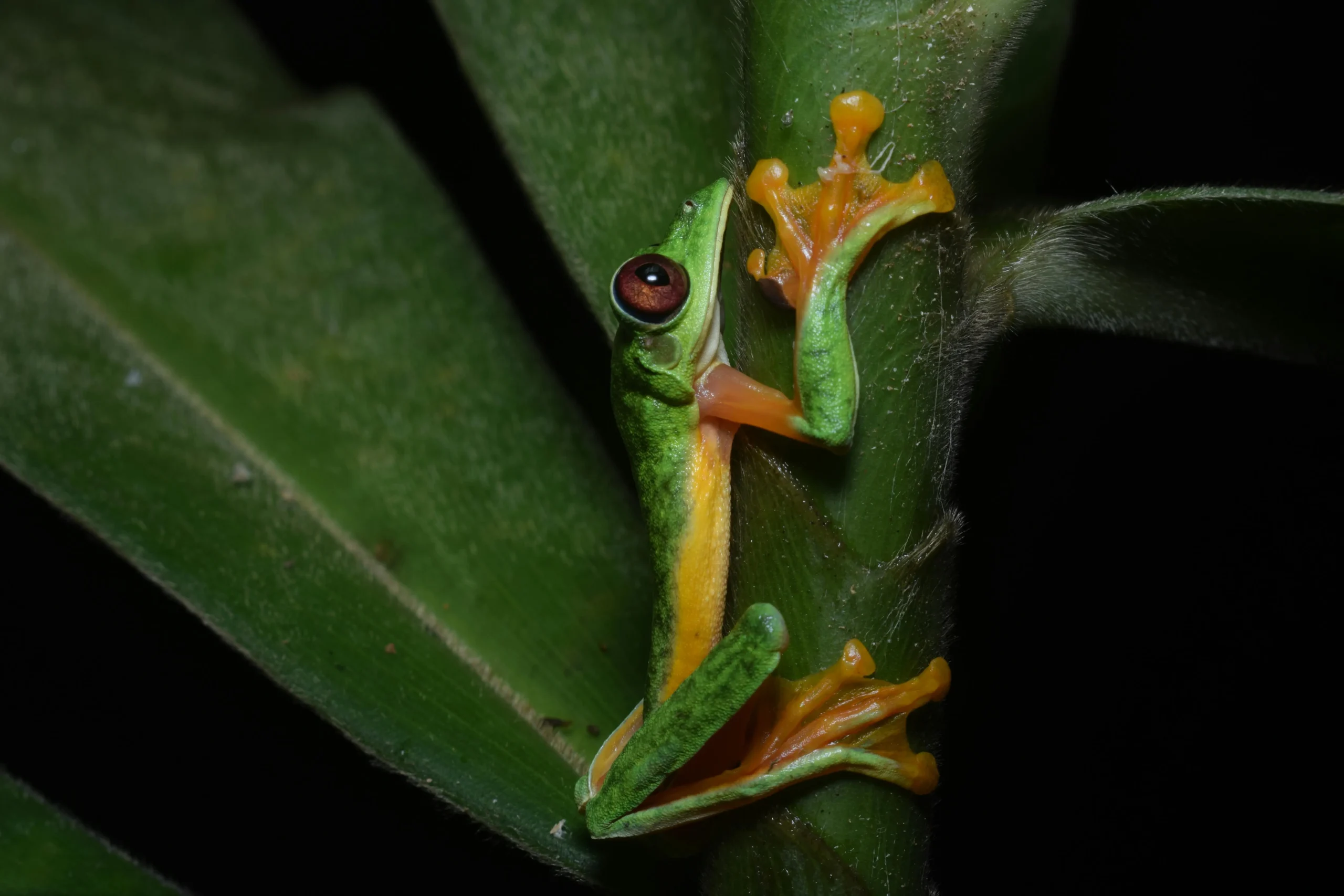
Malabar Gliding Frog (Rhacophorus malabaricus)
Clad in bright green with striking pink webbing between its toes, the Malabar gliding frog is a canopy acrobat. It doesn’t just leap — it glides through the air between tall trees, thanks to skin flaps between its limbs. Its foam nests, often found suspended above still water, nurture eggs in a soft, protective cushion until the tadpoles slip into the pools below.
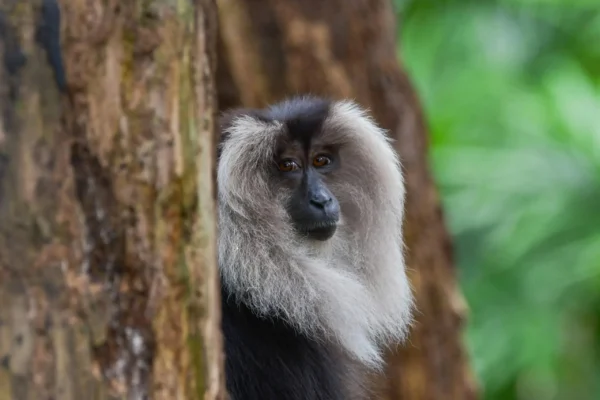
Lion-tailed Macaque (Macaca silenus)
Endemic to the moist evergreen forests of the Western Ghats, this endangered primate stands out with its luxurious silver mane and tufted tail. Despite their fierce appearance, lion-tailed macaques are shy and non-aggressive. Sadly, with fewer than 3,500 individuals left, habitat destruction has pushed them to the brink of extinction.
Malabar Slender Loris (Loris lydekkerianus malabaricus)
This wide-eyed, tiny primate weighs barely 275 grams but captures hearts with its expressive eyes and slow, graceful movement. Nocturnal and arboreal, the Malabar slender loris sleeps in thickets by day and prowls for insects at night — disappearing like a whisper when threatened.
Western Ghats Flying Lizard (Draco dussumieri)
A real-life dragon of the treetops, this elusive lizard glides silently through the forest using wing-like flaps called patagia. Inconspicuous until it flashes its yellow dewlap, the flying lizard is a dazzling reward for those who wait patiently beneath the canopy.
Dancing Frog (Micrixalus saxicola)
Communication in a roaring forest stream is tough, so this tiny amphibian doesn’t croak — it dances. The males tap their feet and perform rhythmic thigh lifts and foot-flagging movements on mossy rocks to attract mates. It’s nature’s own ballet, hidden in the creeks.
Malabar Pit Viper (Craspedocephalus malabaricus)
A gem of the monsoon forests, this beautifully camouflaged snake comes in a kaleidoscope of colors — green, yellow, brown, even pink and blue. Non-aggressive and still, the Malabar pit viper is a patient ambush predator, often spotted on night trails, blending perfectly with wet leaves and moss.
Sri Lanka Frogmouth (Batrachostomus moniliger)
Part bird, part illusion, the frogmouth is a nocturnal insect-hunter with a wide beak and uncanny camouflage. During the day, it perches motionless on branches, mimicking a broken twig so well that it can evade even the sharpest eyes.
Water Drop Bush Frog (Raorchestes nerostagona)
Another gem of the monsoon, this bush frog gets its name from the soft, resonant call that resembles a water droplet. Tiny and often perched on leaves, it’s one of many endemic amphibians in the Ghats, revealing the region’s amphibian richness.
White-banded Ground Gecko (Cyrtodactylus albofasciatus)
With striking white bands running across its body, this ground-dwelling gecko is rare and secretive, usually spotted during nighttime forays. It’s a beautiful example of the Ghats’ lesser-known reptilian diversity.
Olive Forest Snake (Rhabdops olivaceus)
This shy, non-venomous snake is a leaf-litter specialist, perfectly blending with the forest floor. Harmless and rarely seen, the olive forest snake plays an important role in the ecosystem as a rodent controller.
White-bellied Treepie (Dendrocitta leucogastra)
A dazzling and vocal member of the crow family, this striking bird is endemic to the Western Ghats. With its elegant plumage and long tail, the white-bellied treepie is a delight for bird watchers and often spotted flitting noisily through the mid-canopy.
Crimson-backed Sunbird (Leptocoma minima)
Tiny, iridescent, and energetic, this sunbird is a flash of color in the Ghats’ blooming forests. It hovers like a hummingbird around nectar-rich flowers and is often seen in home gardens too, especially near flowering plants.
Nilgiri Forest Lizard (Calotes nemoricola)
Found only in the high-altitude forests of the Nilgiris and southern Ghats, this rare lizard is a master of disguise. It clings to mossy branches and blends into the green, occasionally changing color to reflect its mood or environment.
Why the Western Ghats Matter
These species — and hundreds more — make the Western Ghats a living laboratory of evolution. They symbolize resilience, adaptation, and beauty shaped over millions of years. The Ghats are not just rich in biodiversity but also crucial for monsoon regulation, water conservation, and ecological balance across peninsular India.
Whether you’re a photographer hunting for rare shots, a child marveling at nature’s quirks, or simply a nature lover yearning for stillness and discovery, the Western Ghats offer an unmatched experience.
Step into the forests, listen to the silence, and meet the wild residents of the Western Ghats. Every leaf rustle here holds a secret.